
Ferrari’s FY25 results are in, and while the numbers were strong, the real story lies in what comes next. With a packed product cycle, the launch of the brand’s first BEV, and a shifting macro backdrop, Morgan Stanley’s analysts compiled “10 Questions for Management” — a roadmap of what investors should be pressing Ferrari leadership on in 2026.
Ferrari’s order book stretches “towards the end of 2027,” yet 2026 will be a complex year. Seven models ramp up — including the F80 and the highly anticipated BEV, the Ferrari Luce — while five models phase out.
Margins: Can Ferrari Hold the Line?
The report asks whether investors should expect negative volume growth in 1H26, followed by a recovery as new models scale. With only three models in full global distribution for much of the year, the timing of the F80 and Luce ramp will be critical. Despite a €200M FX headwind, Ferrari still guides for flat-to-improving operating margins in 2026. The analysts note that mix should improve in the second half, but SG&A and D&A will rise as the product cycle accelerates.
A key question: Will EBIT margins dip in 1H26 before rebounding in 2H26?
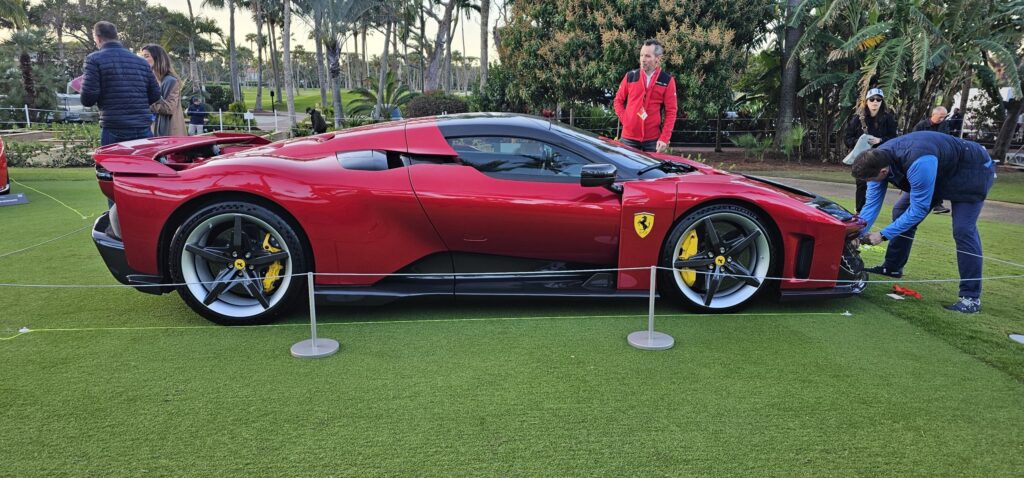
F80 Ramp-Up: The New Halo Car
Ferrari delivered only “a few units” of the F80 in 4Q25, but investors want to know how quickly production will scale. With a planned run of 799 units and a price tag of €3.6M, the F80 could meaningfully lift mix and margins — if execution stays on track.
The report probes whether Ferrari expects a ramp similar to the Daytona SP3 and how much of FY26 revenue is already locked in through down payments.
Personalization: A Quiet Profit Engine
Personalization represented roughly 20% of Cars & Spare Parts revenue in FY25, driven by high-end models like the SF90 XX and Purosangue. Ferrari expects similar levels in 2026.
The analysts ask whether this elevated level is sustainable — or if it will normalize as the product mix shifts. They also highlight that personalization likely contributed to Ferrari’s standout 4Q25 margin beat. Ferrari reports that residual values remain “stable and solid,” supported by record auction results in Arizona and Paris. Since the secondary market is estimated to be twice the size of the primary market, this matters.
The report questions how Ferrari interprets auction data versus broader used‑car trends, and whether hybrid models — supported by extended warranty programs — are seeing improved resale performance.
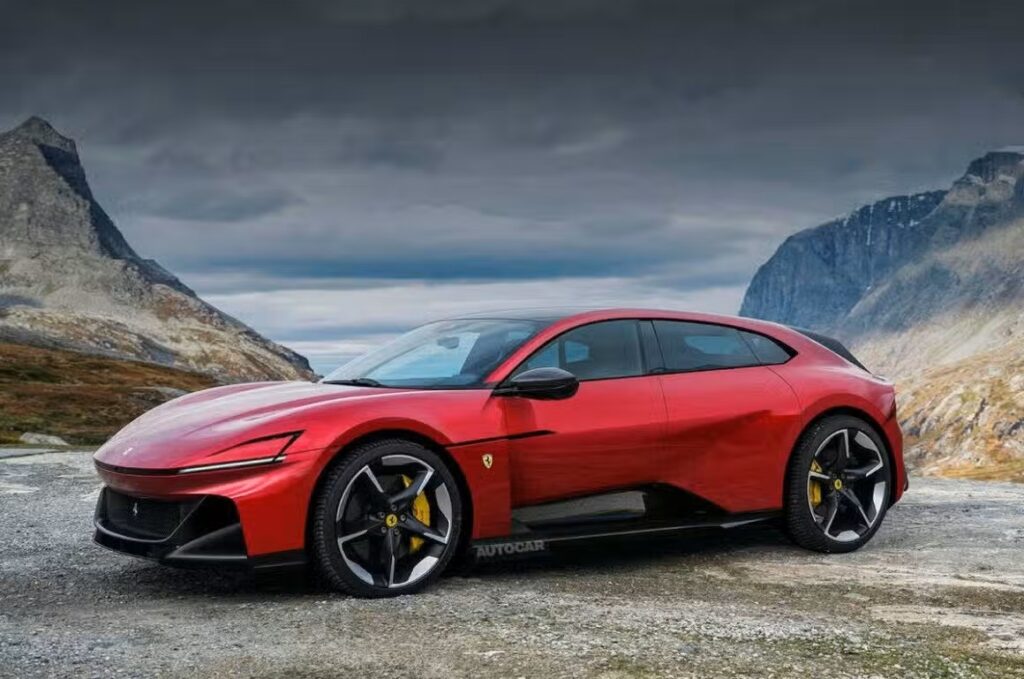
Ferrari Luce: The First BEV
The Luce will debut May 25 in Rome, and Ferrari insists it will not push the BEV onto customers. Instead, volumes will be driven by demand from those who “love the car.”
Key questions include:
- How will Ferrari position the Luce within the range?
- What safeguards will protect brand equity and residual values?
- Why launch the first BEV as a range model rather than a limited series?
Ferrari maintains a 20‑40‑40 mix framework (EV–hybrid–ICE), but says it can adapt based on customer preference. The analysts ask how much flexibility Ferrari truly has to shift production capacity without incurring cost or execution penalties — and how different powertrain mixes might affect long-term desirability.
Geographic Allocation: Managing Brand Scarcity
Deliveries to the Americas fell 8% in 4Q25, but Ferrari attributes this to model changeover, not demand. The company actively manages regional allocation to protect residual values.
The report asks whether regions like the Middle East or India could absorb more volume during transition years — and how rollout sequencing affects profitability, given Europe’s lower margins relative to the U.S.
Pricing Strategy: Protecting the Brand
Ferrari continues to prioritize price/mix over volume. Entry-level models like the Roma and Amalfi play a key role in bringing new clients into the ecosystem.
The analysts explore:
- Whether demand elasticity is shifting at the lower end of the range
- How Ferrari mitigates tariffs and FX pressures
- What internal indicators (cancellations, dealer feedback, configuration behavior) signal pricing limits
- Whether Ferrari’s 2030 guidance assumes ongoing pricing power
Ferrari generated €1.5B+ in industrial free cash flow in FY25, supported by F80 downpayments and favorable working capital. For FY26, Ferrari guides to ≥€1.5B again, with slightly higher capex but normalization in working capital. The report also questions the pacing of Ferrari’s new €3.5B buyback program, given the recent share price correction and Ferrari’s strong balance sheet.
Ferrari enters 2026 with a rare combination of challenges and opportunities: a dense product transition, the launch of its first BEV, and a macro environment that demands precision. The 10 questions outlined by Morgan Stanley highlight the key pressure points investors will be watching — from margins to mix, from BEV strategy to brand stewardship.