
Ferrari Fridays always bring something special, but few stories resonate as deeply as the tale of chassis 3729GT, the one-and-only Bianco Speciale Ferrari 250 GTO. Recently discussed on The Ferrari Marketplace podcast with host William Ross and collector car expert and writer David Neyens, this episode dives into the provenance, racing history, and sheer mystique of one of the most coveted cars ever built.
One of 36… or 39?
The Ferrari 250 GTO remains the ultimate Enzo-era V12 GT car. Officially, 36 were produced, though debates continue over whether prototypes and rebodied cars push the number closer to 39. Each was hand-built at Scaglietti, hammered into shape by artisans whose craftsmanship ensured no two cars were exactly alike. Panel gaps varied, doors differed in length, and each bore the unique character of its maker’s touch.
The Only One in White
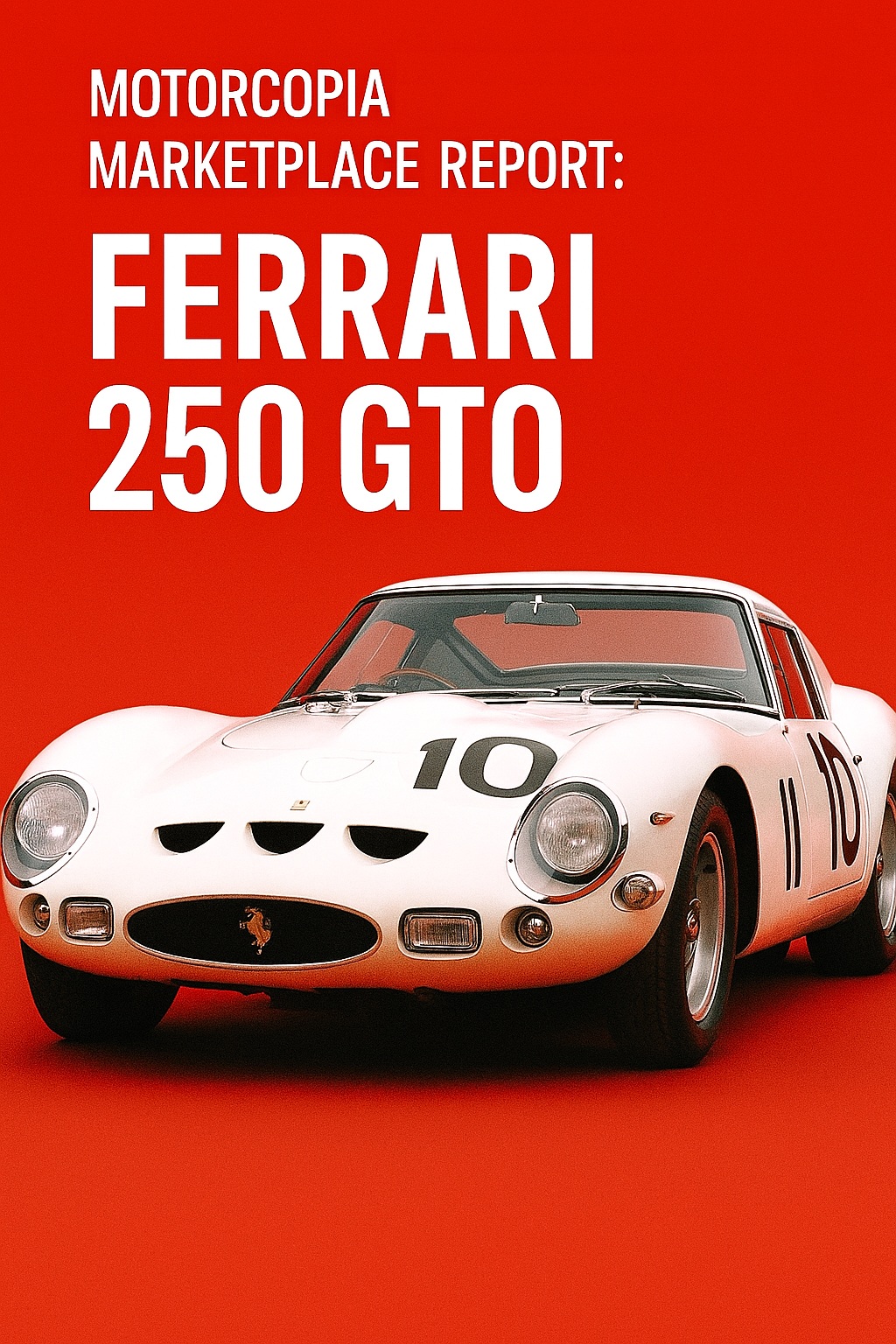
Among these rare machines, chassis 3729GT stands apart. Ordered in Bianco Speciale—a subtle racing white associated with British privateer John Coombs—this GTO is the only example ever delivered in white. Though repainted red in the 1970s, collector John Shirley later restored it to its original hue, preserving its singular identity. Today, it stands as a striking contrast to the sea of Rosso Corsa Ferraris.
Racing Pedigree: A Who’s Who of Drivers
This GTO’s racing history reads like a hall of fame roster:
- Roy Salvadori, 1959 Le Mans winner alongside Carroll Shelby
- Graham Hill, Formula One World Champion, Indy 500 winner, and Le Mans victor
- Mike Parks, Ferrari engineer and development driver
- Richie Ginther, American F1 driver and Le Mans competitor
From Goodwood to Le Mans, the car was campaigned by some of the era’s greatest talents, embodying the transition from gentleman drivers to professional racers.
A Formula One Twist
In 1965, the car’s original V12 was transplanted into a Cooper Grand Prix car, a testament to Ferrari’s engineering versatility. Privateer teams often repurposed proven sports car engines to stay competitive in Formula One, and this GTO’s powerplant even raced in the British Grand Prix. Ferrari later cast a brand-new, period-correct replacement block, ensuring the car retained factory authenticity.
Provenance and Preservation
Unlike many of its siblings, 3729GT was never heavily damaged. Its long-term ownership adds further prestige:
- Jack Sears, famed British driver, raced the car in period and later owned it from 1970 to 1999.
- John Shirley, respected American collector, preserved it for decades thereafter.
Two owners over 40 years is a rarity in the GTO world, underscoring the car’s stability and cherished status.
Auction Rarity
Public sales of GTOs are exceedingly rare—only three have crossed auction blocks in the past decade. Private transactions, like David MacNeil’s reported $70 million purchase in 2018, highlight the stratospheric values these cars command. With its unique color, right-hand drive configuration, impeccable provenance, and unbroken racing history, 3729GT is poised to be one of the most significant offerings in recent memory.
A Perfect 10
Wearing racing number 10, this GTO is more than a car—it’s a cultural artifact. It represents the golden age of GT racing, the artistry of hand-built Ferraris, and the enduring passion of collectors who preserve automotive history. As one enthusiast put it, “It’s a perfect 10.”
RARE Ferrari GTO - The Only White One Ever Built!
The Motoring Podcast Network: Years of racing, wrenching and Motorsports experience brings together a top notch collection of ...knowledge, stories and information. #everyonehasastory http://www.motoringpodcast.net
► Check out our membership program and go VIP at: https://www.patreon.com/join/gtmotorsports
►► Other cool stuff: https://www.gtmotorsports.org/linksShow More










Motorcopia Market Insights – Where passion meets performance, on the road and in the financial charts.
Motorcopia delivers proprietary market indices — including the Market Pulse™, Forward Index™, Buy/Sell/Hold Index™, and ValueScope™ — alongside auction coverage, investment insights, and collector-vehicle analysis. With a focus on serving high-net-worth collectors, advisors, and industry professionals, Motorcopia combines deep cataloguing expertise with data-driven reporting to spotlight actionable trends, opportunities, and results across the global collector-car market.
About David Neyens
Motorcopia is an independent collector-car market intelligence and publishing platform founded by David C.R. Neyens, a veteran writer, researcher, and auction-catalogue specialist with a long-standing presence in the industry since 2008. Known for his deep expertise in classic and exotic automobiles, David has long been a trusted voice in auction catalogues and in the pages of enthusiast publications. Now, he’s bringing that wealth of knowledge to the digital age with Motorcopia.com, a unique platform dedicated to the intelligence and insights of the global collector car market.
**This information has been republished with the consent of David Neyens and Motorcopia.com.
To learn more, visit www.motorcopia.com – Buy. Sell. Hold. Drive.
About this Episode
Summary
In this episode, William Ross from the Exotic Car Marketplace and guest David Neyens from Motorcopia.com delve into the intricate details of Ferrari’s legendary 250 GTO, one of which is set to cross the block at Mecum Auctions. They discuss the car’s rich provenance, including its one-of-a-kind “Bianco Speciale” color, its status as one of only eight right-hand drive models, and its storied history with notable drivers like Graham Hill and Roy Salvadori. David provides an in-depth market analysis and valuation estimate, predicting the car could fetch upwards of $63 million. They also highlight the importance of documentation and the evolving mindset of high-net-worth individuals investing in such rare automobiles. The episode underscores the excitement and historical significance of the Ferrari 250 GTO, making it a highly anticipated lot in the upcoming auction.
Highlights
- 00:00 Welcoming David Neyens from Motorcopia.com
- 00:49 Discussing the Ferrari 250 GTO
- 02:17 The Expertise of Marcel Massini
- 03:59 Handcrafted Ferrari Details
- 09:44 Famous Drivers and Racing History
- 12:55 The Unique White Ferrari 250 GTO
- 13:07 Engine Replacement and Racing Lore
- 19:52 Auction History and Market Value
- 27:54 Analyzing Market Trends and Valuations
- 28:52 The Unique Ferrari GTO; Historical Significance and Provenance
- 34:40 Valuation and Market Activity
- 37:57 Investment Insights and Future Projections
- 44:19 Auction Dynamics and Buyer Psychology
- 52:02 Conclusion and Final Thoughts
Transcript
Crew Chief Brad: [00:00:00] As part of Ferrari Fridays, William Ross from the Exotic Car Marketplace will be discussing all things Ferrari and interviewing people that live and breathe. The Ferrari brand topics range from road cars to racing drivers to owners, as well as auctions, private sales and trends in the collector market.
William Ross: Welcome back to La Ferrari Marketplace. I’m your host William Ross, where we talk everything about Ferrari. If you have listened to the Break Fix podcast a few episodes ago, we have the gentleman that I have on today, Mr. David Neyens from Motor Copia. We, uh, had an awesome chat with him. Just a wealth of knowledge and what he can put together on a car model, what have you is just unbelievable.
Brought David on today ’cause we’re doing a whole special in regards to Mecum and the Ferrari. Two 50 GTO that’s crossing the block. Kiss me auction there in January, which is the [00:01:00] one and only Bianca Speciale chassis. 3 7 2 9 GT need say. David, welcome back. Thanks for having me. It’s awesome. Yes, this is fantastic.
You are immediately the person we thought to come to this. We had our previous podcast episodes that we did with Chris Bely from Ferrari P course of Nashville, and then also Sam Murtaugh from Kom itself. We got into it and then as we talked, a lot of detail that we can start really getting into, and David is the man that can fill in a lot of these holes.
You know, there’s a lot of things that were kinda. We weren’t sure about, we didn’t wanna say the wrong things, trying to get more detail on it, so we thought it’d probably be a good move, maybe really get into some of the nuts and bolts. Looking at David’s notes, what he put together, he said he whipped together something really quick for us, and it’s basically six pages of stuff.
I’d hate to see what his thorough ones are. You’ll need some coffee to get through them. All this, had it been fun, one of 36, the GTO is just a great car. I mean, it had been kind of pretty cool getting
David Neyens: into it. Absolutely. I mean, you might as well just dive right in on the deep end with this is the ultimate classic V 12 Enzo era Ferrari ever, and they’re all [00:02:00] special, but these are the elite of the, uh, of the market.
So it’s really exciting to get into this.
William Ross: Yeah, most definitely. And that’s kinda one thing we could touch on first. It’s one of 36 or is it? 39, you know, series one, series two, ’cause some series one’s got re bodied and all that kind of stuff, and rebuy back. And so what’d you dig up on, that kind of stuff.
David Neyens: The numbers I’m working with are Marcel Massine. Uh, kindly provided me with a list of Ferrari production numbers years ago. He had access to the Ferrari factory records directly as part of his knowledge base.
William Ross: And those of you don’t know who Marcel Masini is. He is the guru. On Ferrari. I mean, he’s incredible.
So knowledge, just what he’s able to do and just be able to accurately script. And you know, if you want your Ferrari legitimized, yes, the Red Book class, she is number one. But then having that Marcel Massine report is probably like one A. I mean, he’s just that well respected and his knowledge
David Neyens: is just incredible.
He’s probably laid eyes on so many of them. He’s also very gracious. There’s been times where I had a very detailed pointed question about a certain classic Ferrari and [00:03:00] I could just call him up and he’d say, well, I’m at an auction right now, David, but I could tell you off the top of my head that you know, this is, you’re correct or
William Ross: Yeah, exactly.
I mean, his knowledge is retained. Oh,
David Neyens: yeah. Unbelievable. And being able to connect the dots like that and access the actual provenance of something, the actual documentation’s amazing. So that’s the other thing, a lot of great people in this business that I’ve been able to interact with and get to know, and that makes it a lot of fun too.
Generally there’s 36, not counting. I believe there were two prototype cars. They could be classified as GTOs as well, but the number I’m seeing is 36 and all. But this is the beauty of researching these cars. They were track weapons. They were meant to win GT championships, world manufacturers championships.
Which they did three years running, 62, 63, 64. But there’s always evolution, race to race, and so some of the later cars also showed some changes, and there’s one early car, as you know. I think they called it a three 30 LM slash two 50 gto. It just makes everything that much more interesting. Uh, whether it’s [00:04:00] 36 or 39, as some people say, the handcrafted aspect of these cars, you know, that people were actually hammering bodies at Scte.
Coach works using old school methods and panel beating and there was nothing prefabricated at all on these.
William Ross: Yeah. Cigarette glass of vino sitting on the work table next to ’em and hammering away artwork and, and no two exactly the same. No. And I always thought it’s funny ’cause you know, you look at one side of a car and then you go to the other side.
Gaps are different. Everything. And they’ve even said it, some doors are shorter than others, some are longer. I mean, it’s just very minute. Oh yeah. Once you start looking at it. But yeah, I mean that’s what you come up with though when stuff’s handmade like that. You’re not working with CNC machines.
Getting right down to scribing and makes it that much more unique.
David Neyens: Absolutely. That was a magical time. I mean, it just gives these cars that much more individual character and flavor, and this one’s got it in spades, well beyond the special white color, which was a rarity. I think it’s the only one of its kind.
Yeah. The only car produced in [00:05:00] white. I think it’s just that much.
William Ross: Cooler. Our previous one we did with Chris Neely from Prancing Horse. You know, he actually had the build from the, uh, factory where the order sheet was, and it was ordered in that Bianca Speciale, why it was white. That was kind of one thing we were trying to figure out.
That was kind of one of COO’s racing colors. It’s not like. Bright white, but you know, he had a special white that he used for his cars and I think he had a, a gray or some other color that he also utilized on his stuff. Yeah. So you’re getting one in 36. I mean, so it only 36 cars are built. So I mean, right there loans, radio, but then you only got the only one that ever left a factory in white.
It’s unbelievable. Absolutely. It always amazes me though, ’cause you know, you go back mid seventies. Someone’s got a crystal ball and can see the future. I mean, everyone would be a billionaire, right? But back then, you know, it was an old race car like that. They didn’t care. So one of the only, he had that thing painted red.
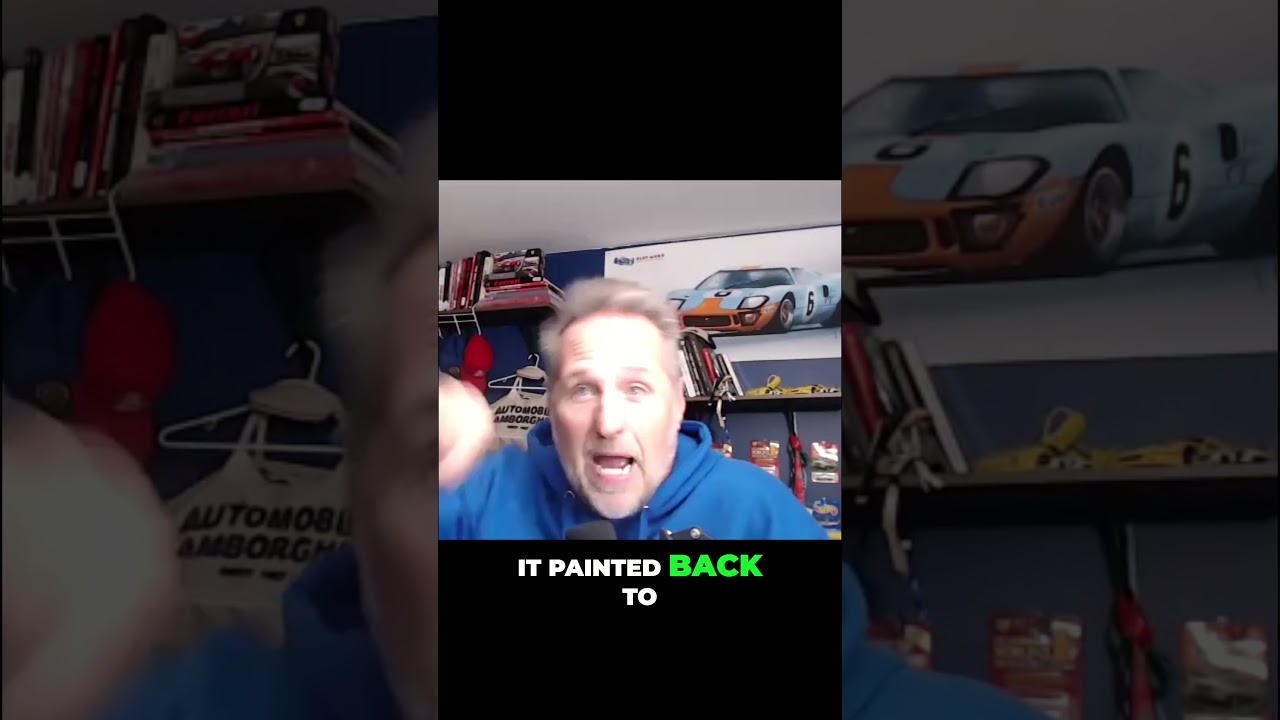
That’s what you would think, Ferrari red. ’cause no one thought, Hey, you know what, factory color, everything like that, you know, adds value. Oh, oh yeah. And luckily John Shirley was wise enough to get it painted back to the white. And I think he had to be convinced, painted back the white. And everyone’s like, it’s only one.
[00:06:00] So thank God he did. ’cause I think it looks spectacular and white.
David Neyens: Well, it’s a standout, a mutual friend of ours. We were on the phone last evening about it, and she said, I also love that it’s wearing number 10 because it’s a perfect 10. Yeah, I didn’t think about that.
Don Weberg: Yeah,
David Neyens: that’s perfect. Yeah. Yeah. You know, and it’s back to like, that’s the Graham Hill, uh, 1962 Goodwood Tourist Trophy, uh, number on it.
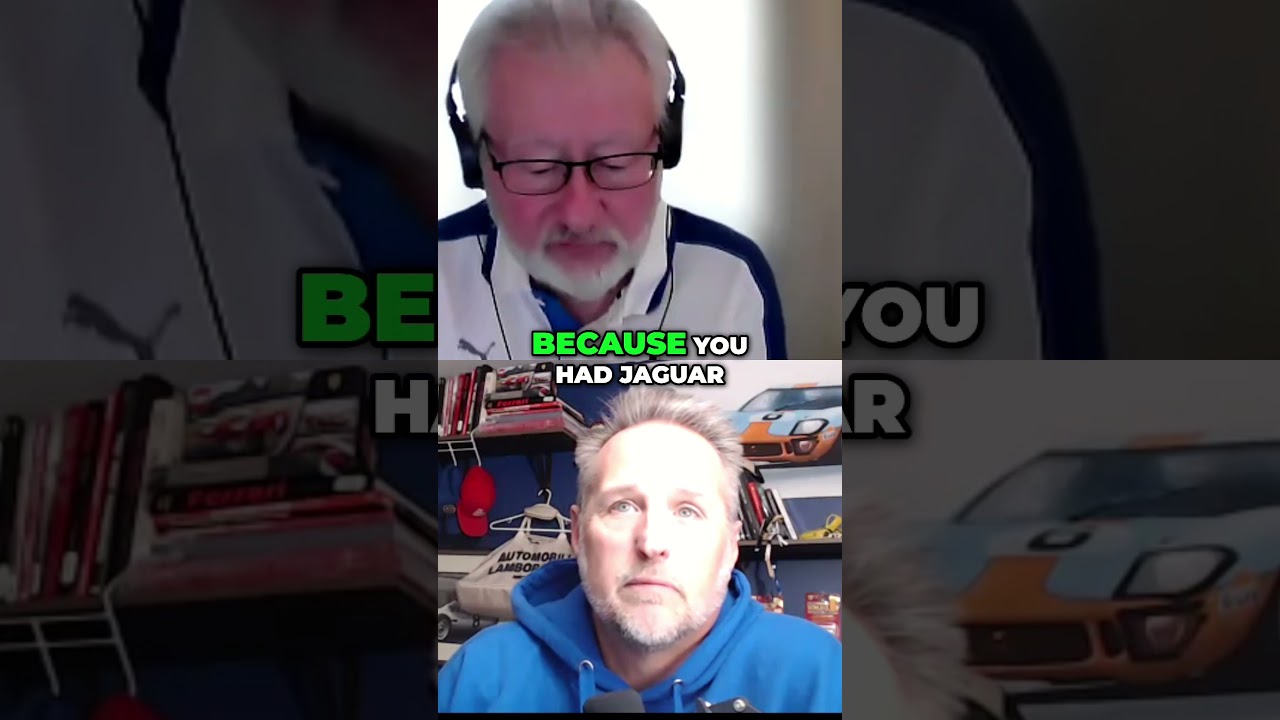
Yeah. You know, it’s come kind of a full circle, kind of a deal. The other thing about John Coombs, uh, who purchased the car being a Jaguar dealer in the uk. I read some conjecture. There’s a couple of accounts, there’s a really great article covering this car exhaustively, but for one or two details and sort of in the, just as the Internet’s emerging, but it was in one of my back issues I’ve got of Caino from 2001.
It might’ve been covered in there, or in a book published in 1982, a really, really good reference book on GTOs called the GTO Super Profile.
FERRARI EXHAUST: Mm-hmm.
David Neyens: In either of those two sources, apparently Coombs, he purchased the Ferrari because he was trying to convince Jaguar to get. Off their rear ends and make a [00:07:00] lightweight JE type to be more competitive in, uh, GT racing.
So, you know, it’s a magical time when this car was built and born and starting to be raced exclusively in Britain and period, because you had Jaguar going toe to toe with Aston Martin, which had an amazing racing record too, and Ferrari, and it was just like an arms race. Each one is just. Outdoing the other one, a more powerful car, a lighter car, a more aerodynamic car with each of their succeeding models.
So that’s like one of the golden eras of GT class racing.
William Ross: Coombs never confirmed it. It was always a well known fact that he actually loaned the car to Jaguar to kind of do some reverse engineering on it to get that lightweight to try and match it. And it still couldn’t get there, but they got close.
But I always thought that was kind of cool too with this car. You know, Hey, borrow it for a little bit and see what you can get in there and scrutinize. And I thought that was always kind of humorous as well. ’cause it’s just like. I mean, why not? I mean, he was a huge, huge Jaguar guy, but he wanted to
David Neyens: win, and the manufacturers all went all out.
Then nowadays, I mean, you can’t do certain modifications to [00:08:00] some of these cars, especially Ferraris without getting a legal letter. Those kind of backroom stories about certain usages of cars when they’re renew is, is absolutely fantastic. You know, may Jaguar tried up its game too, and even though they arguably had better resources than Ferrari did at the time, I
William Ross: would think, yeah.
David Neyens: To be able to do that. I mean, they were concentrating on road cars and the racing was sort of promoting the road cars, vice versa. Ferrari was more interested in racing and paid the financial price for that.
William Ross: That’s when his finances, I mean, they were always. On a precipitous of failing, but things were tight.
Oh yeah. And racing was in his blood, but it was incredible. He was able to pull out of that factor and have these guys built. Unbelievable.
David Neyens: Yeah. It’s one of the more interesting eras in Ferrari lore when the GTO was, uh, most competitive because Ferrari was going through so many changes at the time. And then, you know, they had just had the Palace Revolt, they called it.
They had a real brain drain, uh, outta Ferrari. Oh, massive. At the moment. It took some time to manifest fully what the results of that. But nonetheless, I mean they were kicking the [00:09:00] competition, uh, in this period
William Ross: we’re trying to figure out, and I did a lot of digging. There was only eight right hand drives built
David Neyens: right on.
William Ross: And the consensus always is, you know, they did the right hand drive well because of Lama because it was quicker to change drivers and stuff. And my thought was, is no Coombs ordered this car from them, him being British. No, I want right hand drive. Were you able to maybe dig anything up?
David Neyens: I think it’s a combination of both.
I wish I had something saying, you know, a note to the factory or something, you know, on an order form kind of idea. ’cause I love, you know, making sure I have documents or something to point to that’s reliable. But I think it’s a combination of both the initial driver roster that had that car except Gie Ginther from the states in 64, I believe when he co drove that car.
So they’re all British, right hand drive. And then like you said with Lamont, that’s even more, uh, of a good reason why the right hand drive
William Ross: Ginther is a great segue into the next portion here is there was some very, very famous drivers that wheeled this car either by themselves or you know, obviously [00:10:00] two drivers.
’cause back then at Lamont, I mean it was only two drivers. You couldn’t have more than two. But I mean, there was a who’s who in regards to people that drove this car.
David Neyens: Absolutely. You’ve got Roy Salvadori 59, uh, Lamont, 24 hour winner, uh, co-driving with Shelby. I mean,
William Ross: in itself. That’s incredible.
David Neyens: Yeah. That’s just, that’s just one.
Right. And then you’ve got Graham Hill went on to be the 1962 and 68 Formula one World Champion Indy 500 champion. In 1966, he won Lamont driving a mat in 72.
William Ross: That’s a story in itself.
David Neyens: Yeah. Yeah. And then at the end of his life, just a couple years later, sadly in a plane wreck, he had his own, uh. Formula one team.
Yeah, it would’ve been exciting to see what that man could have done had he been able to go on further. Oh, I agree. You’ve got Mike Parks. He was a Ferrari development and engineer. Uh, apparently after he had a, a really bad F1 crash in 67, I believe. Once Mike was better, he wanted to go back to competitive F1 driving and Enzo Ferrari apparently [00:11:00] said, no, you’re more valuable to me as an engineer.
If that story holds interesting. He was the first exceed 300 kilometers an hour on the SSON with a Ferrari three 30 LMB leader. And the cool thing is this set of drivers, it’s just the point in time when the gentleman driver was becoming the professional driver. Yeah. Now we have super athletes. I mean, these were real, they, they were real people.
William Ross: Nowadays. You just got guys, hey, they only do F1. They only do, you know, yeah, they really don’t jump around. But these guys, they weren’t getting paid all this money. They were getting it from start money prize monies. They raised whatever they could get their butt into so they could make a living.
David Neyens: A lot of these guys drove in, uh, non championship points, races too.
Sadly, a lot of great drivers, their careers ended in some of those events. They were really committed to what they were doing.
William Ross: That’s what drove all these guides of British and to indie. Was the money 200 grand or something that the winner got? Oh yeah. I mean I know it was for that timing. It was a lot of money.
And I remember Jim Clark made this time, he goes, I don’t make that in a year racing all this stuff. I can do it in one race.
David Neyens: [00:12:00] Yeah,
William Ross: heck yeah. They’re gonna come over and do that.
David Neyens: Back then that was generational wealth creation. I mean winning. Oh God, yeah. And your career. I mean, what, when that was a actually a, a like a championship points race internationally at the time too.
I mean, that was big stuff. You know, there’s even a driver. I didn’t know Michael Salmon or Solomon, I might be pronouncing it incorrectly, but I looked him up and he had a 20 year frontline racing career. He did, I think, virtually everything. I, I think he really got into sports cars in Lamont later in his career, but it was 20 years straight.
That was a new name I saw. And they’re like, oh, that’s interesting. Can you imagine back then though, early to mid sixties, you got all the top international drivers. Many of them were British. A lot of the Top Points events were British. Then you morph into the Beatles, the British invasion, and then, I mean this, the cool factor to me just kind of goes up from there.
Geez.
William Ross: You know, that’s one of the instances where it’s like, man, I wish I was born and be part of that. Could you, man, I mean, just. Yeah, I’ve been crazy. So expanding on talking about, okay, being one of the only white ones, and this is one of only eight [00:13:00] right hand drives. The other interesting story with this car too, is the engine.
That’s right, the motor got replaced, it comes in the spare, but what were you able to dig up?
David Neyens: And again, a neat part of racing lore, this GTO’s factory V 12 was removed, I believe it was in 64. 65 was after the last time it was raced in the TT at Goodwood. In Britain, there was a bit of a trend to Grand Prix cars at the time where this Ferrari engine was lighter and reliable and race proven.
So it went into, uh, Cooper, uh, grand Prix car for 1965, and there were rule changes with Formula One at the time, and some teams weren’t able to deal with, I guess, the restrictions or the new changes to the rules that year. So what they would do is they take a sports car or engine, or a sports racing car or a GT class engine.
It’d be lighter and, and again, race proven and they drop it into their, uh, F1 car, make it more lightweight and still keep an older chassis competitive again. So this one went into a Grand Prix car. They missed it in Caino, but again, that’s early stages for the internet. [00:14:00] The internet makes everything a lot easier in my business, you know, to look things up.
William Ross: Oh, definitely. Yeah.
David Neyens: So there’s no shade to anybody there, but, uh, there’s this wonderful book. I mentioned earlier, it’s called the Ferrari two 50 GTO Super Profile by Chris Harvey. It was published in 1982 for Haynes that does the, uh, maintenance manuals for a lot of, yeah, a whole lot of cars. I find that actually that publisher in that series to be super high quality and it describes.
By name, who’s F1 Car got the engine. I’d like to know where it went and try and find that. So there’s a cool Formula one Grand Prix crossover between British GT Racing and British Formula One competitors. Apparently this car was raced in the British Grand Prix in 65. With the original V 12 from our GTO that we’re looking at.
I think they ran around 10th or 11th kind of a thing against factory teams. So I think it’s pretty cool that private tier.
MOTORCOPIA.COM PROMO: Yeah, that’s respectable.
David Neyens: Yeah. And the other thing is like the GTO itself, I mean that was mainly campaigned by private tier. I believe there was only 1 2 50 [00:15:00] GTO that Ferrari actually raced under the Ferrari.
Yeah. CAC banner of its racing team. So these were out in the wild with privateers. They really, they did the yeoman’s work of, uh, getting the, uh, the manufacturer’s championships for Ferrari, uh, 62 to 64. Absolutely. So it’s a great chapter in their history,
William Ross: you know, and that’s a neat little note in regards to that motor getting dropped into an F1 car.
Yeah. We just shows the versatility of that to be able to utilize it like that.
David Neyens: Yeah. They could go for distance and hold together, uh, despite being, you know, highly tuned and exotic and everything. So that shows the adaptability, like you said, of the Ferrari V 12. It’s kinda startling to me actually to learn of this sort of trend is kinda like the sports racing cars in the sixties and they drop American v eights and as the chassis became a little less competitive, maybe a little heavier than the competition, but the addition of some cubic inches or some horsepower would, you know, or some lightness as, uh, Colin Chapman used to say add lightness one way or the other.
You might be able to move the Venn diagram, uh, to a nice sweet spot for, and keep going a [00:16:00] little longer.
William Ross: No replacement fork displacement.
David Neyens: Yeah, exactly. The other notable thing about this GTO, as you know, and a lot of other people that study them, are trading them, is the fact that it was never wrecked.
Yeah, there was a shunt in a race, but it just damaged front body work. They were able to probably pound it back into place and make it pretty again. Again, nobody was expecting these cars to be the art market valued cars that they are now.
William Ross: Yeah. I mean that’s basically, that’s what that has become. Oh yeah.
You know, value wise with that car. The other interesting fact. We were talking about this in that other episode with Chris Mely. Murtaugh was, to me, I think it just, I don’t wanna say enhances value, but I don’t think it really is a detriment. Ferrari cast a brand new block stamped it. Correct. Made it just how it was back then.
Yeah. I mean, it’s a new block for that car. It wasn’t like they used new material or anything like that. I mean, it’s period. Correct. In my mind it enhances it. I mean, you have a new motor that was made by the manufacturer for that car. Absolutely.
David Neyens: There’s a lot of auto manufacturers that are coming around to [00:17:00] the idea of that their heritage is priceless and needs to be not only preserved, but honored and promoted.
And I think Ferrari in, in my time in the auction business, I’d have to say Ferrari is probably the company that takes their heritage most seriously. So it’s really amazing the support that they’ll give. Obviously it’s a two-way street, but them overseeing the, the casting of a new engine that’s to the absolute correct spec and stamping it and everything is, is fabulous.
I think,
William Ross: I don’t know if it’s, they had the foresight to think of it. But they have casting from every card that left that factory. They have documentation on it to be able to go back, either make a new part or anything like that. I mean, their historical archives is unbelievable. So I don’t know if it was, say someone had the for said, Hey, we gotta keep this all in order because Yeah, Lamborghini didn’t give two shits about it.
David Neyens: Yeah.
William Ross: For the longest time. And then I don’t about any other manufacturers, but Ferrari had the wherewithal in their mind saying. We need to preserve this stuff for these cars, which is fantastic.
David Neyens: Yeah, you’re absolutely right. It makes me [00:18:00] absolutely bonkers because I, I have to be research heavy. I’ve, I use a lot of really good print sources.
I’ve built that up. Filing is another issue, but I, I do, I, I know where to look. The weird thing is I know where to find everything.
Crew Chief Brad: Like I know where it’s at. Oh, yeah. Yeah.
David Neyens: But I can’t tell anybody else. I have to go and like physically look at it. But anyway, that’s a work in progress. But the other thing is.
It’s amazing the value of that kind of documentation. I just hope there’s a renaissance and an appreciation everywhere for actual physical documentation.
William Ross: There’s no reason not to.
David Neyens: Absolutely. There is so much to be gained from learning what’s in Ferrari’s files. People, like I said, Marcel Masini, who went through the actual production records and he’s there on site looking through everything years ago.
I really appreciate what Alfa Romeo and Maserati, you can get copies of their documents. They seem to really be taking their heritage seriously. But nobody ever expected these cars that would cause so much economic activity or so much passion and, and owners. The late friend of mine, uh, Christopher Renwick, he was, [00:19:00] uh, one of the pioneers of our business at one time.
He had purchased and sold three and possibly up to 6 2 50 GTOs at one time. For about 6,500 bucks to $10,000, very late sixties, early seventies. He had a partner, a bankrolling him. It was John Callie, uh, a Hollywood studio executive. They were buying and selling these used up old race cars, and Christopher saw the value when no one else really did.
I think there’s an ad for a $14,000 asking price. For A GTO in 1963 and it was the class winner at Daytona. I think one of the Rodriguez brothers drove it for, uh, an error of the Reynolds tobacco fortune. And there’s an ad. $14,000 was the asking price from a Buick dealer in California.
William Ross: That’s what I mean.
A little over a hundred grand in today’s dollars. And yeah, it’s right, but I mean it’s not cheap, but concerning what it is again, having that crystal ball. Oh
David Neyens: yeah. 2020 crystal ball. Absolutely.
William Ross: Yeah. Going forward here with our conversation. ’cause the one big thing that we wanted to avoid and we didn’t get into it ’cause I just didn’t want to start touching it [00:20:00] because God only knows what this thing’s gonna cross the block and sell for.
Because I mean, it could be anywhere.
David Neyens: That’s right.
William Ross: It’s got all the rarity going forward. Even more rarity in guard. Right hand drive, the only one in white. Everything like that. To your point, you mentioned before, these don’t come across a block in a public auction very often.
David Neyens: Not at all. In the past, was it 10 years?
There’s only been three. That’s exactly right. Yeah. Uh, 2014 to 2023. There’s three of them that came to public auction, two of them from rm. The first one was in 2014, and that actually my friend Christopher, he’s been on record as having tried to actually engineer a purchase of that for somebody, and I was talking to him at that time.
So it’s, it’s kind of an interesting story, but there’s more of them than I should be getting into right now. But, you know, that was the first, as I’ve listed here, uh, the first major modern era, GTO sale, uh, at public auction, and apparently it brought 38 and a bit. Million, I’m assuming that’s with buyer premium, but which could be 10% on top.
Yeah, that’s what did in there. Yeah,
William Ross: because I know [00:21:00] ’cause the last 1, 20 23, that’s including the premiums. Yeah. I mean, yeah, it’s not cheap. 2014, is that the one that the, uh, person was killed in it? The French driver? I believe so.
David Neyens: And in fact. I’ve got its history printed up. There was a major accident, I believe so finding one that’s never been wrecked.
These are track weapons all out. I don’t even think I see a roll cage in pictures of this car back in the day. No, those guys, they might have moved past polo helmets by then, you know? And aviators. Goggles, maybe. Yeah, like, you know, safety was like questionable. If that, if it added weight, probably not. I, I believe there was something to do with that first one.
But even at that, a real GTO with provenance, uh, amazing amount of money. And since 2014, I mean, I’d probably suggest that major currencies are probably deflated by close to 20%, looking at deflation or inflation calculators. So 2014 versus now. I think you’d see that one take a bit of a bump up in value in today’s terms.
And then the two [00:22:00] r RM cars, I mean, that was heavy expectations five years apart when they sold and, and about 3 million give or take dollars difference. So there’s some stability, but it’s again, few and far between as everybody knows. But you can still get some meaningful expectations. Again, the, there’s quite a considerable uplift in value.
The better the history, the more long-term previous ownership is present. Correctness or restoration or lack thereof, that can certainly add to value as well. It’s going out on a limb somewhat, definitely to try and pull out some kind of an idea of what to expect on this one. Yeah. Then we also have the private sale of, it’s a 4 1 5 3 GT
William Ross: McNeil’s little, um, 70 million purchase in 2018, and that kinda just goes to show you though, in regards to provenance history, that’s another one that.
Yeah, I might have had a ding here and there on the fender stuff, but that was another one that wasn’t wrecked. Tour de France winter, I mean, excellent history. You know when you go out and say, which one should I get? That’s the one outta all the GTOs that was in. Hence, that’s why it brought the [00:23:00] per. Yeah, and he wanted the car.
Yeah, you’re gonna pay up for it. It’s that adage you’re getting, especially like if it’s in a public setting, if you got two people in the room, you’re gonna have fireworks. If they both want the car. That’s what’s gonna get it going up there. But I mean that was just, hey, negotiation going. He wanted the car, but that’s a nice, nice
David Neyens: car.
And what a trophy because being in the business he’s in, being in motorsports affiliated with Laguna and all that and, and heavy sponsorship of Motorsport that’s putting your wallet where your mouth is right there, you know, that is walking it like you talk it,
William Ross: you know, obviously he’s got kids and stuff like that, so, but I think that’s gonna be another long-term family ownership vehicle there as well because it’s.
Kid race, you know, was it David? You know, I mean, he’s an excellent wheelman. Mm-hmm. You know, going into it. And they got an unbelievable collection of cars as well, especially Ferrari specifically to your point mentioned about long-term ownership. This car basically in the past 40 years has had two owners.
Yeah. Jack Sears and John Shirley. That’s
David Neyens: it. And Jack Sears drove the car back in the early sixties. That’s the great thing about this. And then he’s [00:24:00] reunited with it again when, uh, Neil Coroner owned it in the late sixties. He’s invited up to coroners, is given a test drive in it, and then said I’d really like write a first refusal and then ended up buying the car and owning it all those years.
So 1970 to 99, I believe. Yep. That’s a wonderful full circle kind of thing. Uh, as far as I’m concerned. And Jack Sears. I’m sure the name rings Bells with a lot of people, but he was, uh, an interesting character because he drove the, uh, the 4 27 Galaxy, I believe in one of the tourist trophy events at Goodwood.
Yeah. Probably frightened everybody. Yeah. Probably everybody in on the track would move out of his way as he’s drifting around with a NASCAR Galaxy basically. And he had the, the strength to be able to handle that car on the track like that.
William Ross: That’s why Gurney drove too. Right? Yeah. That’s a great, great story right there.
Being in the stands are just. I mean, obviously you hear that didn’t go around the track the whole way, but that just had to been such a sight for spectators alone, not just the guys on
David Neyens: the track. Oh yeah, sure. That really, he got a lot of people excited when they saw [00:25:00] Sears driving that back in the day, for him to be able to purchase the car that he actually raced competitively in the early sixties, uh, in frontline service.
I mean, that’s huge. And then he held on till, I believe, 99. Yeah, 99, 2000, something like that. You know, so, I mean, long-term ownership, obviously love of the car. I mean, I mean, when you buy a GTO, I mean, you’re probably gonna rub elbows with. People like Nick Mason from Pink Floyd. If you like Floyd as I do, you know, the fact that he’s a skilled vintage racer and a gt owner since the seventies.
I mean, that, that’d be kind of a real, a really cool moment to, to get to meet him, uh, in that setting.
William Ross: I mentioned in the other episode we did, I just love it. The fact that he used that as collateral to finance their tour and whatever it was, 86, 87, he put that up as collateral so they could get the money to be able to go out and tour, to do the reunion thing, whatever.
David Neyens: You’ve gotta be kidding. I had no idea. Oh, you didn’t know that. Yeah, that’s holy cow
William Ross: story. So
David Neyens: in my opinion, early high-end asset finance. Yeah, that’s really cool.
William Ross: Came back and spades what they made on the tour. But yeah, that’s how they [00:26:00] financed. And I think it was, you know, I, it was like a couple million bucks or a million bucks they got and used that as collateral said, holy cow, to your point.
All a sudden you have an asset that in the banking world in the eighties, the saying, you know, it’s not just a toy because now you have it where collections, everything like that is commonplace. But
David Neyens: that was a little bit revolutionary, I think then with a, a high-end art type. Yeah, I think they were considered to be kind of art at that point already, but.
The other thing is, uh, to your point about Mason and the tour, it’s obvious to family offices and high-end collectors and high net worth people everywhere worldwide already. But you buy something like this that, I mean, that is an asset that even if it doesn’t appreciate in value, you know, blue Sky here, you’ve got a, a massive long-term asset.
Probably will see you through any economic tailwinds. Yeah, any collateral, uh, lender would probably put a good chunk of money if you ever should need it. Fails. I’m gonna get my hands on that car. Oh, I’d love to have a fractional ownership share in something like this. Although I think the price of entry would be pretty high.
William Ross: [00:27:00] Yeah, exactly.
David Neyens: But you know, there’s. There’s that whole site.
William Ross: Now the cool thing, I love what you do. There’s gonna be a link in the description. You guys gotta check out David’s site ’cause Dave get into it about what you have on this one. But kind of explain how you take a car and what you do in regards to like, you know, collectability rarity ranges and whatnot.
Because you really break this down as some very, very meaty, substantial dollars and cents and information.
David Neyens: Yeah, I try to get very granular with what I’m doing, where someone can actually like take a report that I generate and actually. Take action if they want to get into the market. And there’s so many sweet spots in the market where there’s opportunities for people to buy something, to enjoy and see it.
Appreciate there’s others that are okay. These are hardcore collector cars that have to be housed in specific conditions. You know, climate control and security and this, that, and the other. Something like A GTO. But there’s so many vehicles in between. So I try to help people with. The idea of what the car’s worth, what an appropriate value range is, and whether or [00:28:00] not it’s a buy, sell or a hold.
Kind of like when you look at financial channels like CNBC or whatever, and they’re, they’re analyzing a stock in a company. I took that approach because I used to work in banking, but anyway, I try to apply some of those. Methods to what I’m doing today with motor copia. Basically, I’m looking at comparables just like an appraiser would, and then adjusting for how comparable they are to the car that we’re considering.
So I started building these models that would help me to assign scores to, uh, vehicles, uh, specific vehicles or groups of vehicles if they’re fairly common. So I’m looking at their market trend. Is there a good volume of them selling, uh, being offered and being sold? Are they actually selling within a reasonable period of time or are they just sitting on company’s websites or are they being passed, uh, with reserve not met at auction kind of thing.
So I’m looking at sort of the sales trend. Is it growing, is it quick? Is there velocity and quickness in their sales? Obviously rarity is massive. So in this case with the GTO as far as the trend, blue chip assets, uh, especially [00:29:00] art where there’s a crossover between. Cars like the GTO and Art, those kind of blue chip assets that ultra high net worth people are collecting.
Those are stable right now. What we’re seeing, you know, the ultra high net worth buying market is still there. Nobody’s panicking, nobody’s running. People are still continuing to buy things like GTOs Rarity is off the chart with this car, you know, so I gave that a 10. Outta 10. I mean, it’s the only one in white from new, as I understand it too.
It’s not significantly restored. I would have to leave it to a car specialist with Mecum to tell me or not, or a Ferrari expert to tell me the interior is apparently not restored.
William Ross: And we were discussing it before too, and we, we don’t know why, but Ferrari GTOs commonly have that blue interior. That’s right.
And that car was from the factory, had that in there, but like within two weeks. Maybe three of Coombs receiving, taking delivery of the car. He changed it to black.
FERRARI EXHAUST: Okay.
William Ross: We don’t know. Had something with, you know, whoever was driving whatnot, don’t know, but he changed it to black, like maybe he didn’t like blue.
I don’t know.
David Neyens: Yeah. [00:30:00]
William Ross: Majority of ’em all have that blue interior. It’s like a staple.
David Neyens: That’s right. This car has a lot of integrity, is what I’m trying to say. It’s been refinished back to its early sixties colors and and racing delivery. So we gave it a 10. Cultural significance is something I look at as well, and most car aficionados, the car is totally recognizable and people are aware of it.
It’s almost a 10 out 10, it’s 9.5 out 10 on cultural significance, cost or accessibility. I gave it a three because only the most wealthy people can buy it. Yeah, and that’s just a function of. Rarity, provenance and desirability, and, and this is ultra desirable and ultra rare at the same time, you know, there’s a lot of Gen X buyers now that have become wealthy or are becoming wealthy.
They’re innovating, they’re in the market, and there could be somebody with new money that nobody’s heard of before. Nobody expects that could just kind of come right up in the bidding process. Market activity. I gave it a six. The supply’s limited, as you know, but demand is steady at the top end. So I mean, I think that the market is very robust for this [00:31:00] type of car.
You don’t have to do any explaining about this car. That’s the other thing about it, the history’s rich. The history is interesting and it’s good history. There’s no stories. It looks like it’s been very well documented through the years and having had. Two owners since 1970 though, that helps as well.
William Ross: Oh, definitely.
David Neyens: And people that are qualified to own it and enjoy it and keep it. It’s been vintage, raced a little bit with the spare engine. I, as I understand it, under Yeah. Uh, John Shirley, they’ve taken it on tours for our, they’ve gone to two 50 GTO reunions in France. Just fabulous. I would have to do that if I had a car like this.
William Ross: Yeah, it’s a must. You have to do it. Yeah, it’s and, and then be with all the
David Neyens: other people that own these cars. I mean, you imagine that kind of a experience. So with a weighted average, it’s a 7.4 out of 10, and which might not sound great, you know, 74% kind of thing. But how I score things, that’s solidly bullish.
And it’s fit for selective buying by qualified collectors. What I’m looking at, it’s a solid, sweet spot to acquire an investment grade [00:32:00] legend. The photographs that are out there from back in the day of this car at Goodwood and in various races to understand how hard these cars were driven, apparently they were really good if they were drifted on a, a track that had lots of curves, you know, so seeing these guys like, like we said earlier.
No roll cage. They had seat belts, but, you know, helmets, I think were not quite standardized quite yet, uh, in terms of specification. And these guys, they’re drifting and they are, they’re going all out. I have a hard time describing the mindset I, I get when I see a car like this. You know, again, hand built, designed by people who were inventing racing technology as they went.
The legends, yeah. Yeah. Joe Bini, I believe he was sort of the engineer at Ferrari that really spearheaded. Taking advantage of the GT class rules and developing a car that was ever more specialized for the rules. Ferrari did that, like no other manufacturer, uh, as far as I’m concerned back in the day and the way that racing technology then primarily was what this car was about, but.
[00:33:00] It was purely a GT car, so you could slap plates on, they were raced with number registration tags on them. If you wanted to throw a couple bags in the regulation trunk compartment and go drive across the Alps or something. I mean, I mean these were James Bond kind of people.
William Ross: Technically it’s an evolution of the two 50 S wb.
That’s right. And that’s how he was getting it through the regulations. Saying, no, it’s, it’s not a brand new car. No, it’s actually just this car. We just tweaked it a bit. Yeah, it was a brand new car, but he had the pull and it was Enzo, and they’re like, okay, we see that with everyone else. Like that’s a brand new car.
Like, no, it’s still just an evolution. And that was always kinda humorous.
David Neyens: Exactly. And, and you know what? And in that. Class of racing to not have Ferrari competing at the top level would’ve been a, a loss. Oh yeah. To everything, to the whole idea of it. I, you imagine being in the stands at one of the races this car was at in Britain back in the day, and you know, again, Ferrari, Jaguar, Aston battling to a lesser extent.
It was win [00:34:00] on Sunday, sell on Monday, but I suppose. Perhaps for Ferrari Road cars were becoming more important. Road cars, abduction was being taken more seriously, but Aston and they were about selling cars.
FERRARI EXHAUST: Yeah.
David Neyens: It would’ve been really thrilling to see them. I mean, it’d be thrilling to see one of these cars in a in action anytime going through the gears.
But back in the day that would’ve been just like off the hook.
William Ross: YouTube’s great and watching old stuff, but it’s not replacing actually being there. No, it just had to have been unbelievable. And not just seeing one, but four GTOs, the D type seats. I mean, just. Cars that are, are just legend to us today.
Pushed to the limit and just banging fenders and doing everything. Oh, yeah. Doing what they were made to do. Absolutely right. Yeah. Let’s get into, I guess the outfit in the room, so to speak, is valuation. You get numbers thrown out left and right. You know, I’ve talked to several people and they’re like, are they doing the right thing by going through an auction or even, because they always keep referencing, you know.
Seinfeld’s nine 17 most recently, and that debacle there and mm-hmm. Everything like that. So kinda going back and forth and [00:35:00] I, I think it’s brilliant. You have a valuation estimates done up. Yeah. So let’s walk us through that, what you have, I’m gonna go out on a
David Neyens: limb here, but using. But here it is. I’ve already gone through what the basis, what the mindset, what the whole zeitgeist of where I’m going with this, this car, there’s several scenarios.
I’m gonna just start with just what’s on paper here. The median value for a two 50 GTO. In number two condition, which is excellent. There’s excellent, and then there’s number one concourse. So I’m using the Haggerty ratings mm-hmm. To help inform this. So my starting point is the median value of a of a two 50 GTO in number two condition as a baseline.
Okay. Now, I haven’t inspected these cars directly, so I’m going by what their sale results were and what this car represents and, and what we know about it. Which is the whole deal. This car has been repainted under John Shirley under his care to its 1962 livery [00:36:00] with, uh, the Graham Hill, uh, number 10 on it.
When somebody at that level as a collector has something repainted, it’s not going to Earl Cheves.
William Ross: No. You know, or Mako,
David Neyens: there’s probably an immense amount of prep avoidance of taking anything out of the car that. Should remain. That’s an earmark originality. So this car is, as it was raced, it looks visually beautiful.
They didn’t put it on chrome wire wheels. Those were painted wheels, silver painted wheels. Back in the day, it looks great. I gave it an uplift of 20% to a number one conditioned car. So now we’re looking at 60, just a tad, over 60 million us. The story of the car because it’s so good, I didn’t wanna overdo it.
We applied a 5% uplift because the story is good, the provenance is great on this car. So now we’re up at just a bump over $63 million in immediate value. Now that’s not assuming two strongly motivated bidders in the same room together, clubbing each other over the head with millions of dollars. My checkbook’s bigger.
Oh [00:37:00] yeah. I would love to see an actual. Two to five people in the room actually bidding that like are qualified, real bonafide bidders. Their credit line is good and yeah, they’re good to go. I want to see stuff like that. I respect the fact that there’s different modalities for bidding remotely online on the phone or with an agent, but I really want to hear somebody like yell and scream that pound their fist.
William Ross: Yeah. I think me comes on board with you with that too. Yeah.
David Neyens: I’m sorry, I, I don’t get it. I, I agree though. Yeah. I’m not in this business to not be excited. Thrilled.
William Ross: Yeah. To see someone standing around a phone doing this.
David Neyens: Yeah, I’ve seen some bidding wars and I tell you, that’s fun. That is really fun to see.
But anyway, we’ve got an Im an immediate value I’m putting on it of it can go higher, it can go lower. What I’m seeing from the data and the considerations I put into this model, 63 million is solid as far as the value. Then there’s a time horizon component that I put onto it. Where I’m also looking at immediate, which [00:38:00] we’ve covered 63 million, a one to two year short term window, because I cannot see anybody flipping this car in three to 12 months.
No. If you’ve, and you’ve bought it, I probably wanna like wrap it up in a bow and put it in my house for Christmas. Yeah,
William Ross: exactly. Yeah. Stare at it for a year straight.
David Neyens: So I’m looking at. A progressively higher window as we move through the next three time ranges. Short term, one to two years, I’m thinking that’s around 66 million in change.
Medium term, three to five years, we’re knocking on 70 million, 69 to 70 million and long term, eight to 10 years, 75 million or plus.
William Ross: What’s that working out percent is like, to me that looks like a good return in eight to 10 years. I, I mean, that’s feeding markets.
David Neyens: Oh yeah. That’s the thing about it. I mean.
I wanna produce a chart with a variety of hard luxury assets versus the collector car market and have it meaningful as to how everything’s compared. What I can say from memory is there’s the Knight Frank Luxury Index, I believe it’s called, that includes collector cars, as well as our cigars, fine [00:39:00] whiskeys, and uh, wine.
I believe the Knight Frank Index of those kinds of luxury assets has outperformed financial assets hands down for the last couple of decades. I agree it coincides with stock options where there’s been only two instances in the last. 27 years whereby company insiders have bought shares in their company as opposed to exercising options to sell those shares at their companies.
So there’s a lot of liquidity in the market. There’s a lot of money floating, and I don’t know if it has a lot of velocity where by people are actually spending the money. Floating around in the economy right now. So there’s a lot of capital, there’s a lot of available money, and it’s looking for homes.
You combine that sort of dynamic in the financial markets with the way luxury markets have performed over the last few decades, and it’s a no brainer. So I, I’m looking at the first. Two subsequent time windows, if I’m doing my metal math properly, about 5% gain year over year up until after you get into the eight to [00:40:00] 10 year window.
And then starting to move up a bit, but I’m being kind of conservative. Marcel Massine had made a, a very informed comment, I believe it was in 2018 when he was asked for a, a sound bite when, uh, David McNeil bought his GTO and he said something like, well, you know, I could foresee in the next five years, a hundred million dollars.
It didn’t happen. But it could happen. I think that there’s money looking for a home that is interesting, that will either maintain value or could appreciate, and when you’re investing in the highest of the high end market like this, I’d have to say if anybody’s looking for safety, I think it’s here and not in bonds and T bills and municipal bonds,
William Ross: and this.
Is the only thing that you could put your money into that you can go and use and enjoy. Put your money into real estate unless it’s your vacation home. Okay. You can go stay there. Yeah. But bills, bonds, I mean, you got a piece of paper. Whatcha you gonna do with that artwork? Same thing. You could stare a little bit in your wall, but I mean, what else you gonna do with it?
David Neyens: And it’s probably gonna be in a vault. That’s the other thing. Exactly. This is tactile. This is something you can touch and see and with [00:41:00] proper care, fire it up and, uh,
William Ross: participate in events. You know, you got 35 other people, well I say 34 ’cause Bamford’s got two and that stuff. So you do the math. I mean, it’s just once you get in return, have your money in that.
Is
David Neyens: just, I think there’s so many intangibles that go with owning something like, and the event eligibility. You get into any event you download, please with something like this. Yeah. It’s a golden ticket. Yeah. I don’t think anyone’s gonna turn you away if you show up. No, I’d like to enter,
William Ross: even if you show up and you didn’t register, whatnot, they’re not gonna turn you away.
Oh yeah.
David Neyens: This is, this is just transcendent on so many levels. It’s just. Amazing. I don’t wanna overdo the, the sort of the attributes of the car, but getting back to value, I even kind of look at a recommended reserve kind of idea to, uh, if somebody’s questioning what they should have used as a reserve, how they should deal with bringing a car like this to an auction, I can kind of walk through their, um.
Options and help ’em with that. Uh, if somebody has a GTO and they wanna put a [00:42:00] reserve on it, I’m calling for about 63 million.
William Ross: As we’re discussing this, we keep referencing what you’ve written up. We could put this up on the website for the video version of this. We’ll have it flash up and you can see exactly what we’re referencing, how David gets together.
And keep in mind that this is just a quick one he put together. I mean, he can go in a lot more deeper and in depth with, to whatever extent you want regards to your car that you’re looking at. I tell you what I mean, especially if you’re getting into high end six figure, getting your seven, eight figure cars, this is invaluable in regards to information for what you’re putting your money into you to make a decision you’re comfortable with.
You’re gonna have everything you could think of information wise to make that correct decision. If you should keep bidding higher, I maybe, you know what, I’ve maxed out what have you, but I mean, it just gives you. That much more. ’cause you know, information is gold in this situation. Knowing history, provenance, everything, not just about that specific car, but about the model range in general for that specific car.
This stuff’s fantastic. I can’t tell you guys how impressive this is. You’ll be like, wow, you’re getting into it and it gives you [00:43:00] the arsenal you need in regards to making an informed, proper decision at auction.
David Neyens: Thank you. That’s what I’m going for. You know, and the thing is, when I was putting motor copia together, I pivoted from in the spring.
From cool car content. I was including from the start ideas about potential values and whether something is of an opportunity to buy or if you need to hold onto it or sell it depending on your needs. I kind of went from that, the cool car content kind of thing with some deep dives and I just went, okay, no, there are people out there that the number one question I would get as a writer when I’m interviewing an owner about a major.
Car they’re selling. Then they say, well David, you’ve been in the business a long time. What do you think my car’s worth? And I have to say the disclaimer, I am here to gather your information. I’m here to compile the description. I can’t get into that. I would refer you to name at XYZ Auction Company that you’re dealing with, and that’s the discussion you need to have.
Directly with them. But this set of tools I’ve been working on, you know, we can help the owner slash seller, we can help the auction house too. If [00:44:00] they have an opportunity and they’re in a bit of a negotiating war over getting a consignment, a significant consignment or not, and we’re, they would be comfortable coming in on reserves.
That’s probably the number one thing is a major stumbling block for people participating in the market is they don’t feel comfortable. A lot of sellers think they can do better, that they have done better. My goal is that the auction company and the seller and the buyer, I don’t want anybody feeling like something got done to them to use poor language, but where there’s everybody’s walking into something where they’re feeling comfortable with the decisions they’re making, and there’s less friction doing what they need to get done.
And so hopefully this service, this set of tools will help with that kind of idea. Like, like I said, less friction, better experience for everybody.
William Ross: Yeah. You want everyone to walk away happy. Yeah. I mean, please. I mean, especially in an auction environment, because the buyer, you want them to come back again when they’re looking for a nice car or two, when they wanna go sell that car, they had a great experience, they’re gonna come back to you to sell it.
Then at auction, you’re not doing it privately would have you. [00:45:00] Absolutely. Having that all around. Good experience. Taste your mouth. In this day and age, your Pickens are pretty good in regards to where you could potentially go. Oh yeah. It’s critical.
David Neyens: Absolutely right. Everybody needs to get what they’re looking for in my philosophy of how I look at things.
And I don’t wanna do something whereby somebody feels that their interests have not been respected. And you know what? Uh, and auction companies, they’re good folks doing good work. They’re creating markets. Oh yeah, they’re a hundred percent. Customer service based. They’re a hundred percent financial trust basis, and they’re a hundred percent involved with making everybody happy, and it’s hard to make everybody happy, even under the best of circumstances.
I enjoy auctions very much, but I’d like to be able to get out to some of these events again, because there are a lot of fun. There’s a lot of electricity in the air, there’s a lot at stake. The best thing, like I said, I want people yelling and screaming when they’re making a bid on this. I don’t want it quiet.
William Ross: I think that’s what Dana Mecom has. Sell that and what he has built because I think it’s great ’cause he knows the customer is [00:46:00] spending 10, 12 grand, so the customer is spending a few million. That’s, you know, a big wide breadth there, dollar wise. But each person wants to have that same experience and walk away happy and be able to cater those people and cater those.
And I think he’s nailed it in regards that because he makes that person that’s getting or selling the 10, $12,000 car feel like they’re selling the five, $6 million car. Yeah. There’s no variance in there in regards to how these people are dealt with. And I think they’ve done an awesome, awesome job with it.
And I think that’s why they’re leading the way. I think regards has
David Neyens: really, uh, impressed me because they’ve, I remember back around 2012, there was a, a significant hot rod. There was a 32 Ford High Boy. It was the Tom McMullen roaster Black 32 Ford that had the blower sticking out the hood and the the flame job on the side.
And it was kind of a staple in Hot Rod Magazine in the sixties. And I think that man was even like the editor, hot Rod or somebody, some player in the magazine at one time in the sixties, seventies. They did a online booklet for that car and the history was known from day one [00:47:00] and when I saw the job they were doing to market that one at their huge auctions versus, you know, multimillion dollar cars that they were also handling, I thought that was really impressive.
They all have their little nuances, their own little stories. I mean, I’d love to just sit inside this car and just kind of. Meditate a little bit and just see if I can soak up some of the aura.
William Ross: I’m right there with you on that. I mean, that’s just, you know, you start soaking in everything. Then you start realizing like, who’s sat behind the wheel, this car, and who’s been, you know, just like all that just story.
Oh yeah. History, everything like that.
David Neyens: That’s what makes what we do really fun.
William Ross: It’s hard to explain to non-automotive people that get that, but you know us that are the maniacs that love this with passion. I mean, oh yeah. It’s like you get it,
David Neyens: you know? It’s just one of those things and if you get it, you get it.
And if. If you don’t, you don’t. I mean the, it’s a fun of what we do though there, there’s something for everybody
William Ross: having these types of cars after auctions that’s helping them become a dominant player in the ultra exotic, exotic cars. Lamborghinis that, I think that’s really driving that. Oh yeah. Saturday alone, if you [00:48:00] tally up all the Ferrari that are gonna sell on sale alone, I, it’s gonna break a hundred million dollars total easily.
Oh yeah. The Bachman collection, the GTO, I mean, that’s gonna be an exciting couple hours there. ’cause there’s some unbelievable car, I mean. To your point being there, I know he and Eric are trying to figure out a way to be there for that. You know, I keep calling it Super Saturday because he’s just gonna be, energies are gonna be crazy.
And to your point, when we get some people in that room battling, it’s gonna be some good times. Very much so. Yeah. So that gives us a nice segue though, on your bidders psychology. You have a nice breakdown as we know it’s gonna be someone that’s got some very, very, very deep pockets. And as you always mentioned.
High net worth individuals seems to be the key word for these people these days, but what else is kind of coming into play in regards to hopefully attempting to buy this car?
David Neyens: I think that there’s always a need for what we’ve already talked about in regard to a historic vehicle like this with great provenance and high value.
We might see more and more family offices that are actually recommending to their family customers. We have generational wealth that’s been created [00:49:00] and that we’ve been trying to maintain for you. We need to backstop that and actually buy. Going out on a limb and purchasing something like this, two 50 GTO.
Because if a car like that were ever to drop in value, because it is now in the province of fine art, in my opinion, that means the whole economy’s dropping. Yes, good point. And then it’d be a point, point where you have something of great value that you can borrow against if necessary, like we said before, or sit on until things turn around.
And I think this is sort of a generational wealth. Play, in my opinion, as one target and if people like that are willing to step out of the box a little bit. And they may have been doing this already. I mean, I was at one auction seven or eight years ago, whereby in Scottsdale where there was a family, they were at another event the night before they heard there was an auction.
Two cars went on sold and they just said, we want this one and we want that one. Where do we go to write it up?
William Ross: Must be nice.
David Neyens: Yeah, yeah, yeah. The one was a, an exceptional four gt, a 2005 or six, and the other one that was for the [00:50:00] son and then the mom and dad wanted a Porsche 9 11, 1 of those, uh, 1989 Speedsters.
William Ross: I’m up for adoption.
David Neyens: Oh yeah. Yeah. I think I said something like that to ’em. We had a great time and they ended up buying ’em and then having ’em shipped home. It was really quite amazing. But the people are out there. The problem is, is for them. Either knowing what’s available and or understanding that it could be something that’s actually not a one anymore.
It’s a more of a need. And yeah, so something like this, if you’re a cultivated collector and you’ve got the, the real estate looked after, you’ve got the investments looked after and the business is good, this would be a great place to, as a store of value kind of idea. But there’s a lot of psychological triggers for it.
I, I don’t know if anybody really talks about this kind of thing. There’s, you know, in terms of. Some of the attributes of this car that we’ve already talked about, and then you combine that with an auction, there’s a sense of urgency in a sense. This is an asset that could perpetuate your legacy kind of idea.
I don’t care. Whatever anybody says, somebody could say, I was once the owner of 3 7 2 9 gt. You know, Ferrari, GTO, [00:51:00] I mean, I’m sorry. That to me is like one of the ultimate things you can say. But anyway, I’ve seen auctions of interesting or significant items or lots that there’s one bid and that’s it. That really can be, you know, kind of sad to see.
So I’m assuming that the bidding will go on for some period of time. They’re not gonna just run this through. I’m hoping to see, like we said, two trophy buyers collide and they’re looking at 60 to 70 million.
William Ross: Me and David could probably talk for another five hours, but this is a special car. Provenance history to your point, it’s never been wrecked.
Detrimentally, you know? Yeah. It has the dings here and there, stuff like that. Two long-term owners right there alone just tells you how special this car is. The only one that was built from the factory in the Bianco Speciale, one of eight right-hand cars. I mean, this is the creme de la creme, but a collected car world.
David went into this in great. He can go in farther detail with his report, but I mean, what he wrote up here just for this conversation is incredible, but it, it really. Breaks it down, tell you how special this car is. You’re gonna have all the excitement from the cars [00:52:00] before that room’s gonna be packed.
So it’s gonna be exciting stuff. So David, I wanna thank you for coming on. It’s always a pleasure. This was awesome, really getting into this. Love it. The links for his site and everything like that. It will be in the description. Hit David up if you, uh, need something done for a car.
David Neyens: Love it. Been great to talk with you again.
It, it’s an amazing car with an amazing story. And the great thing is we can talk about it and it’s, it’s coming to market again. So it it’s gonna set the tone for the future on, on these types of cars
William Ross: doing uh, multiple parts series on this car for Mecum with Mecu. So take a listen to all the other episode and um, stay tuned.
I appreciate it, David. It’s been fantastic. Thanks a lot. It was a pleasure. David will definitely back on further episodes as well. Thank you. Thanks Dave. Thanks guys. Appreciate it.
MOTORCOPIA.COM PROMO: Motor Copia is an independent collector car market intelligence and publishing platform. Founded by David CR ens, a veteran writer, researcher, and auction catalog specialist with a longstanding presence in the industry since 2008, known for his deep expertise and [00:53:00] classic and exotic automobile.
David has long been a trusted voice in auction catalogs and in the pages of enthusiast publications. Now he’s bringing that wealth of knowledge to the digital age. With motor copia.com, a unique platform dedicated to the intelligence and insights of the global collector car market. Motor Copia delivers proprietary market indices, including the market pulse, forward index, buy sell, old index, and value scope.
Alongside auction coverage, investment insights, and collector vehicle analysis with a focus on serving high net worth collectors, advisors, and industry professionals. Motor Copia combines deep cataloging expertise with data-driven reporting to spotlight actionable trends, opportunities, and results across the global collector car market.
For more information or to get your personalized vehicle investment report, be sure to visit www.motorcopia.com.[00:54:00]
Don Weberg: Nobody sells more than Mecca. Nobody. Mecom Auctions is the world’s leader of collector car vintage and antique motorcycle and road art sales hosting auctions throughout the United States. The company had specialized in the sale of collector cars for more than 35 years now, offering more than 22,000 lots per year and averaging more than one auction per month.
Mecom Auctions is headquartered in Walworth, Wisconsin, and since 2011 has been ranked number one in the world with the number of collector cars offered at auction, and is host to the world’s largest collector car auction held annually in Kissimmee, Florida, as well as the largest motorcycle auction held annually in Las Vegas, Nevada.
S Road and Mecum on Time. Divisions offer a wide variety of collectibles for live and online auctions. You can learn more and follow Mecum and their upcoming [00:55:00] events@www.mecu.com, or you can follow them on social at Mecca Auction on Facebook at Mecom Auctions on Instagram. At Ika on Twitter and at Micham auction on YouTube.
ECM PROMO: For everything from Ferrari and Porsche, Lamborghini and Konig seg, visit exotic car marketplace.com. If you’re into anything with wheels and a motor, log onto the Motoring Podcast network and check out our family of podcasts@motoringpodcast.net. This is the place to find your favorite new show. Next up a shout out to David Beatie and his team at Slot mods.
Who custom build some of the coolest slot car tracks in the world@slotmods.com. Let your imagination run wild. And finally, grand touring motorsports covering all aspects of auto racing and motorsports history. Check out their ezine@gtmotorsports.org. All the links for our sponsors are in the description.
Crew Chief Eric: This episode has been brought to you by Grand Touring [00:56:00] Motorsports as part of our Motoring Podcast network. For more episodes like this, tune in each week for more exciting and educational content from organizations like The Exotic Car Marketplace, the Motoring Historian, break Fix, and many others. If you’d like to support Grand Touring Motor Sports and the Motoring Podcast Network, sign up for one of our many sponsorship tiers at www.patreon.com/gt Motorsports.
Please note that the content, opinions and materials presented and expressed in this episode are those of its creator, and this episode has been published with their consent. If you have any inquiries about this program, please contact the creators of this episode via email or social media as mentioned in the episode.
Learn More
On Ferrari Friday’s, William Ross from the Exotic Car Marketplace will be discussing all things Ferrari and interviewing people that live and breath the Ferrari brand. Topics range from road cars to racing; drivers to owners, as well as auctions, private sales and trends in the collector market.




Copyright William Ross, Exotic Car Marketplace a division of Sixty5 Motorsports. This episode is part of Gran Touring Motorsports, Motoring Podcast Network and has been republished with permission.